In the common discourse of Azeroth, the Damage Dealer’s value is often reduced to a single, fluctuating number on a meter. This is a reductive fallacy. While high output is the engine of progression, it is Operational Utility that ensures the engine doesn’t overheat and explode. An elite DPS player understands that their role is not just to deplete a health bar, but to manage the chaos of the encounter. This playbook moves beyond the “rotation” to examine the Micro-Contributions—the subtle interrupts, the precise positioning, and the sacrificial utility—that transform a standard pull into a legendary victory.
The Law of Universal Uptime
The greatest “buff” a DPS can receive is not a potion or a trinket, but the mastery of Movement Efficiency. Many players suffer from Input Dead-Space, where they stop attacking to handle a mechanic. This is a total loss of potential. The elite “Uptime” mindset treats movement as part of the rotation.

Whether it is “stutter-stepping” between global cooldowns or utilizing instant-cast abilities while repositioning, the goal is 100% engagement. Every second you spend not pressing a button is a second the boss is winning. Uptime is the foundation upon which all legendary parses are built.
The DPS Utility Matrix: Small Actions, Big Results
To move from a “Mercenary” to a “Master,” focus on these high-impact behaviors that stabilize the group and ensure the success of the pull:
- The “Lethal” Interrupt: Do not kick the first thing you see. Identify the Wipe-Caster—the enemy whose spell will fear the tank or delete the healer. Saving your kick for the “Must-Stop” is more valuable than padding the interrupt meter.
- Aggro Redirection (The “Tank-Helper”): If an enemy breaks loose, do not run away. Run *to* the tank. This is Spatial Logic. It allows the tank to pick up the threat without moving the entire pack, preserving the group’s “Kill Zone.”
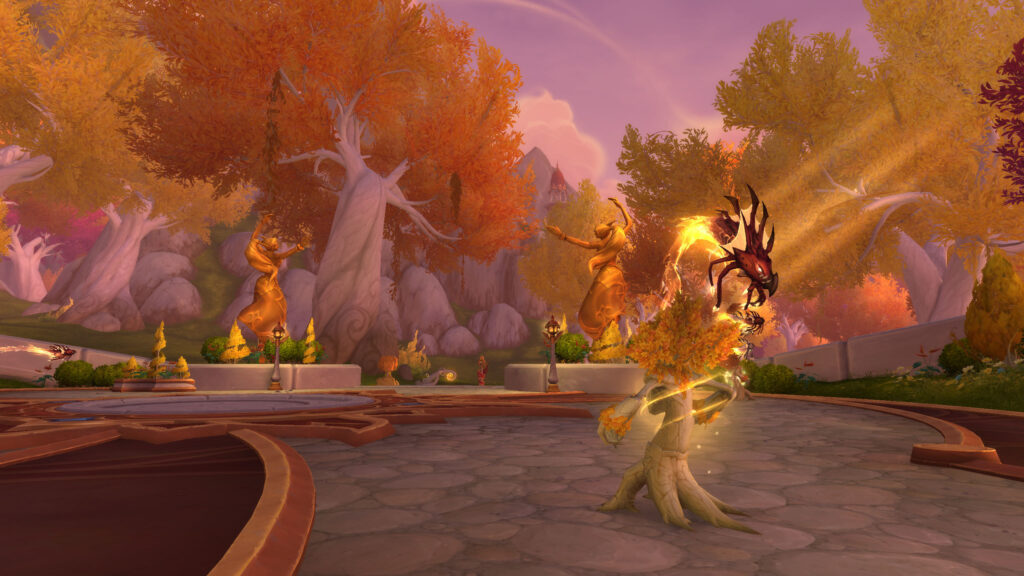
- Defensive Stacking: Use your personal defensive abilities *before* the damage hits, especially during predictable “Raid-Wide” events. This is Proactive Resource Preservation; it allows your healer to focus on the tank rather than playing catch-up with your health.
- Crowd Control Continuity: Using a stun or a slow to help a kiting tank is a “hidden” DPS boost. By preventing the tank from dying, you ensure the fight continues. A dead DPS provides zero damage.
- Focus-Target Management: Use a Focus-Macro to track an secondary target’s cast bar while maintaining your main rotation. This Multitasking Proficiency allows you to handle mechanics without dropping your output.
The Psychology of “Target Triage”
The most common mistake in Dungeons is Priority Blindness—attacking the high-health “Tanky” target while a low-health “Caster” enemy nukes the party. An elite player practices Target Triage.
They identify the enemy that provides the most Mechanical Friction and eliminate them first. This reduces the total “Stress” of the pull. You aren’t just doing damage; you are removing threats in the order of their lethality. This is the difference between “Padding” and “Winning.”
Conclusion: The Complete Combatant
Being a “top” DPS is a matter of administrative excellence. By maximizing your uptime and mastering the utility of your class, you become an indispensable asset.
You stop being the person the healer has to worry about and start being the person the group relies on to handle the hard jobs. In the high-stakes world of modern Azeroth, the greatest damage dealers are those who realize that the “Little Things” are actually the “Big Things.” Play the playbook, master the utility, and lead your group to victory.