When *World of Warcraft: Legion* was released, it marked a significant shift in the MMO landscape, not just with new zones, classes, and storylines, but also in how the game approached its most challenging content: Mythic raids. With the introduction of a new expansion, the Mythic raiding system was overhauled, creating a more challenging, rewarding, and accessible experience for players. In this article, we’ll explore how *Legion* revolutionized the Mythic raiding experience and what made it stand out compared to previous expansions.

The Mythic Difficulty Rework
Before *Legion*, Mythic raids in *World of Warcraft* were already the pinnacle of PvE content. However, the system had been criticized for a few flaws: it was often too reliant on raid size and coordination, and the difficulty spikes could sometimes feel arbitrary. *Legion* addressed these concerns by reworking the entire Mythic raiding structure.
One of the major changes introduced in *Legion* was the normalization of raid sizes. In previous expansions, the Mythic difficulty could vary depending on whether your group was 10 or 25 players, which sometimes created imbalance and frustration. In *Legion*, Mythic raids were standardized to 20-player groups, removing the concerns over the optimal raid size. This shift made Mythic raiding more consistent and ensured that every raid had a set number of players, which led to better balancing of the encounters.
The Introduction of Mythic+ and Its Impact on Raiding
While Mythic+ dungeons were a brand-new feature introduced in *Legion*, they had a profound impact on the raiding experience as well. The success of Mythic+ dungeons proved that Blizzard was able to craft content that was both highly challenging and repeatable, something that had been somewhat lacking in the raid scene up until that point.

The mechanics of Mythic+ dungeons, with their scaling difficulty, affixes, and rewards, inspired a new approach to raiding. Players became accustomed to highly repeatable, scalable content, and the same principles of difficulty scaling were slowly integrated into the Mythic raids. While Mythic raids remained a one-time experience per expansion, the mentality of gradually increasing difficulty to suit different skill levels, much like Mythic+, seeped into raid design, resulting in more varied and flexible encounters.
New Raid Design Philosophy: Complexity and Mechanics
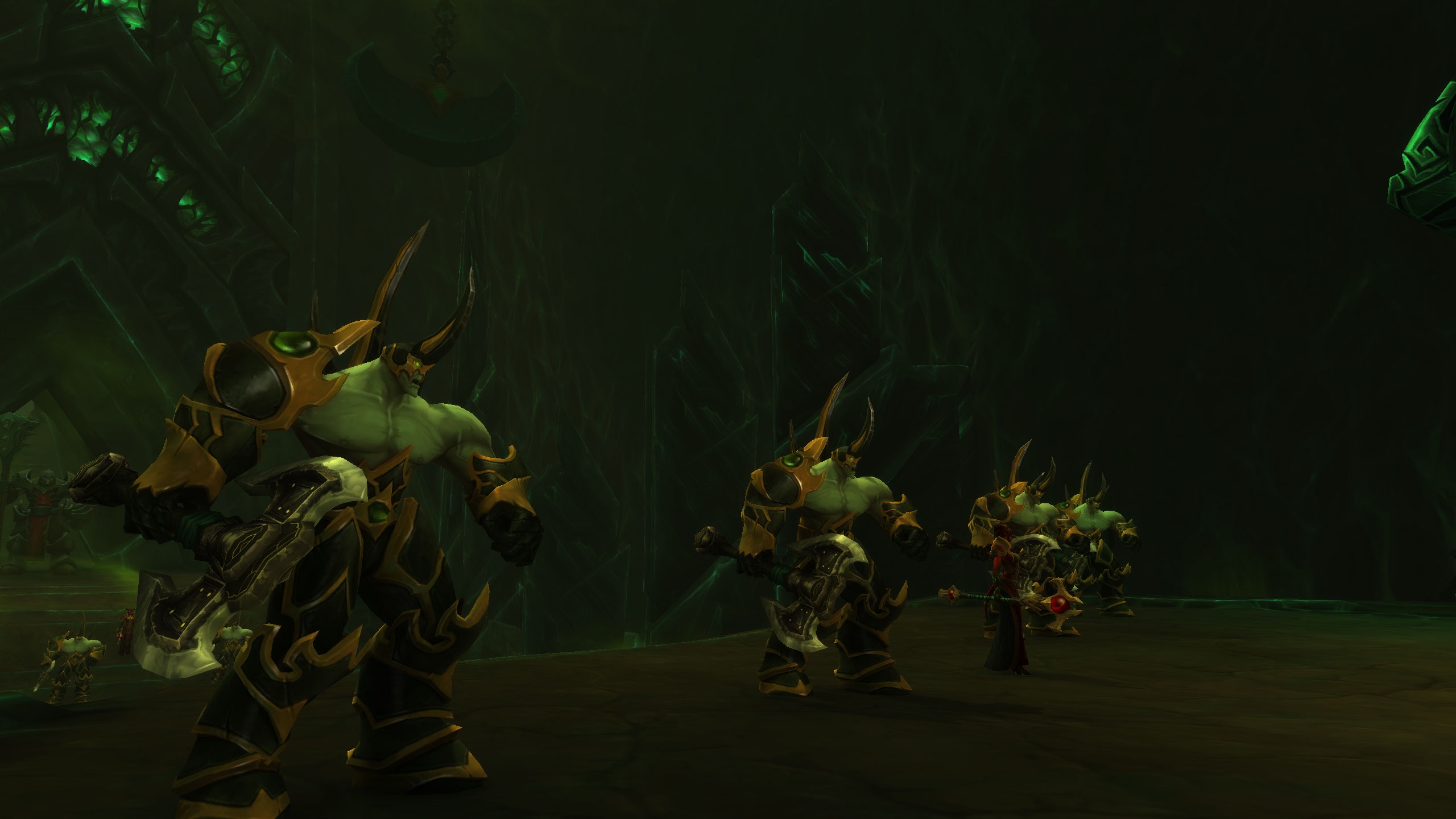
In *Legion*, Blizzard went all in on raid mechanics, introducing some of the most complex and engaging mechanics seen in WoW’s history. Rather than simply focusing on raw DPS and healing checks, *Legion* raids like *The Emerald Nightmare*, *The Nighthold*, and *Tomb of Sargeras* placed a strong emphasis on the strategy, coordination, and execution of unique raid mechanics. These mechanics were designed to challenge not just individual players but entire raid groups working together as a cohesive unit.
For example, in *The Nighthold*, one of the most famous raids of *Legion*, players had to contend with a variety of mechanics, from the interaction of multiple debuffs to constant movement and positioning adjustments. These mechanics were designed to push raid leaders and players to think on their feet, adapt quickly, and communicate clearly. The raid design was highly skill-intensive and became a hallmark of the *Legion* experience.
The Role of Legendary Items in Mythic Raiding
Another significant change introduced by *Legion* was the addition of Legendary items. These rare, powerful items became a cornerstone of player power, and their inclusion in Mythic raids brought a unique aspect of progression. Players could earn Legendary items through drops or quests, and they played a pivotal role in optimizing class performance in raids.
For Mythic raiders, the hunt for the perfect Legendary was part of the overall progression. Some Legendaries provided huge boosts to certain specs, making it essential for players to have the right ones for their chosen roles. This added an extra layer of complexity to raid composition, as raid leaders would sometimes have to consider which players would benefit most from certain Legendaries, creating a more personalized approach to group optimization.
Raiding Accessibility and World First Race
With the reworked Mythic difficulty and the introduction of new systems, Blizzard made a concerted effort to make Mythic raiding both more accessible and more competitive. While raiding had always been a high-end activity, *Legion* focused on making it more inclusive for top-tier guilds and casual players alike.
On one hand, the raid scaling system and refined mechanics meant that hardcore guilds could tackle more precise and difficult challenges. On the other, the addition of catch-up mechanics, such as easier access to gear from world quests and Mythic dungeons, helped casual players stay competitive with the cutting-edge raid groups.
The balance of accessibility and challenge made *Legion* a crucial turning point in the raid design philosophy, and the world-first race for raids like *The Nighthold* and *Tomb of Sargeras* showcased how global guilds adapted to the new system. The Mythic raid difficulty became a test of both skill and preparation, not just raw coordination.
Conclusion
In *World of Warcraft: Legion*, the Mythic raiding experience was transformed through major design changes, increased complexity, and a renewed focus on teamwork. With the removal of raid size variability, the introduction of Legendary items, and the influence of Mythic+ dungeons, *Legion* raised the bar for what players could expect from top-tier content. This shift made Mythic raiding more rewarding, engaging, and accessible, ensuring that *Legion* would go down in history as one of the most transformative expansions for raiding in WoW. Whether you were a casual raider or part of a top guild, *Legion* offered an experience that catered to all levels of players while continuing to push the boundaries of raid design.
Home